
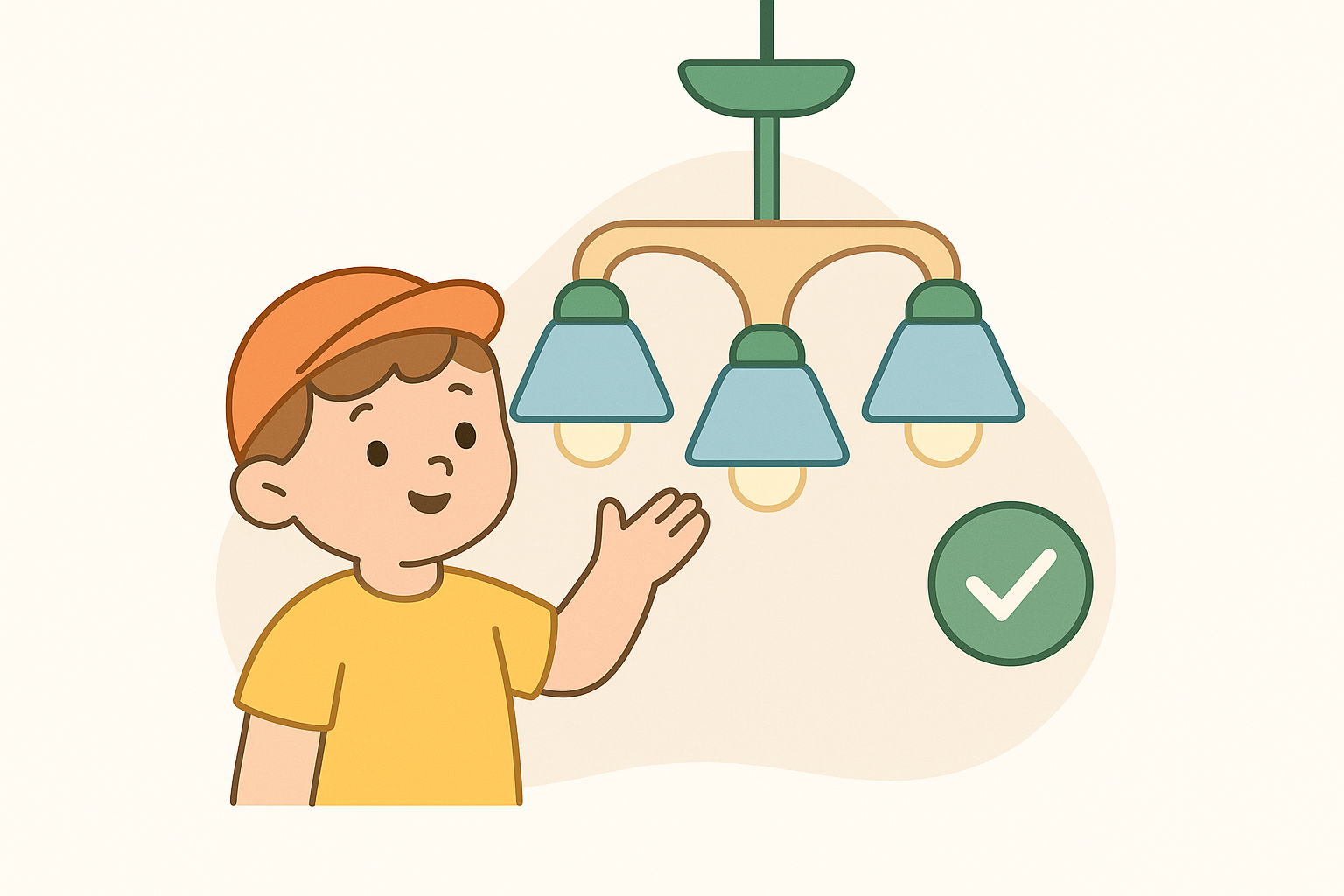

A chandelier can make a kid’s room feel magical. It’s the instant fairytale moment. But we also want safe, sturdy, and low on weird chemicals. Pretty is great. Not dropping on anyone is better.
This guide walks through how to pick and place a kid-friendly chandelier with real-life safety in mind. We’ll cover safer materials, what size actually fits, where to hang it, and when to skip a chandelier for a lower profile light that still feels whimsical.
Real talk: ceilings, bunk beds, and tiny humans with excellent climbing skills change the rules. The good news is you can get the look without taking silly risks.
Do this first: measure floor to ceiling, note the bed height, and mark where kids jump or play under the fixture. Then look up at your ceiling box. If you don’t know what it’s rated for, snap a photo and ask an electrician. It sets the whole plan.
What we’ll lean on as we choose: fixture weight and how it mounts, shatter risk, lead-free materials, independent safety testing, heat from bulbs, and clearance so kids can’t reach it. If your ceiling is under 8 feet or you have a loft or bunk, we’ll steer you to safer alternatives that still feel special.
Why chandeliers in kids’ rooms, and the real worries
The charm that makes it worth considering
Chandeliers pull a room together. They add softness, sparkle, or color without taking floor space. They make bedtime books feel like a moment. That’s the draw.
The top parent concerns at 2 a.m.
- Will it fall if someone slams a door or the kids jump on the bed
- Are those crystals glass or plastic, and could they shatter
- Is there lead in the “crystal”
- Can my kid touch the bulbs or chain
- Is the light too bright or too harsh at night
You’re not overthinking. These are the right questions.
What actually matters most for safety
- Mounting strength that matches the fixture weight
- Clearance so no one can reach it from the floor or a bed
- Shatter resistance and no tiny parts that can rain down
- Low-heat, dimmable LED bulbs
- Materials and finishes that skip lead and high-VOC coatings
If those five are solid, style becomes the fun part.
Installation and hardware basics you should know
Start with the ceiling box and anchors
Everything hangs from this point, so it has to be right. A metal, securely fastened ceiling box rated for the fixture’s weight is non-negotiable. If the chandelier is on the heavier side, a fan-rated box is a safe bet because it handles higher loads. In older homes with plaster, the existing box may be loose or only rated for light fixtures, not heavier ones. In that case, plan for a brace that ties into framing. If you rent or have a concrete ceiling, consider a plug-in pendant with a wall-anchor swag or go with a flush mount.
Action step: check for a UL or ETL label on the fixture and hardware. That means a third party tested it for basic electrical safety.
Plan height, reach, and room flow before you buy
For walk areas, keep the bottom of the fixture at least 7 feet above the floor. Over a bed, aim for 30 to 36 inches above the mattress at minimum, and more if kids are likely to stand or jump. With bunk or loft beds, skip hanging fixtures over or within reach of the top bunk. Low ceilings under 8 feet usually do better with semi-flush or flush mounts that mimic the chandelier vibe without the drop.
Quick trick: tape the chandelier’s diameter on the ceiling to see if doors, closet doors, or the swing of a bunk ladder will hit it.
Choose bulbs and hardware that make it safer and calmer
LED bulbs stay cooler and save energy. Look for warm light around 2700 to 3000 K so bedtime feels cozy. Pair the fixture with a dimmer that is rated for LED bulbs so night mode is soft and flicker-free. Add child-safe cord covers if there is any exposed chain or cord near the wall, and use locking fasteners or closed jump rings so decorative pieces do not come loose.
FAQ
Setup & Installation
Q: Can I hang a chandelier over a crib or bed?
A: It’s safer to avoid it. If you love the look, use a flush or semi‑flush fixture instead and keep at least 3 feet from the bed edge. For open floor areas, aim for 7 feet of clearance from the floor to the lowest point. Always anchor into a joist or use an approved brace and a safety cable.
Q: Do I need an electrician to install it?
A: For most homes, yes. You want a metal, UL‑listed ceiling box rated for the fixture’s weight, proper grounding, and a solid anchor. If your chandelier is heavy, if you’re adding a new box, or if you’re unsure about wiring, hire a licensed pro. It’s worth it for peace of mind.
Materials & Health
Q: Is leaded crystal safe in a kids’ room?
A: Skip it. Leaded crystal contains lead oxide. Dust risk is low, but why chance it. Choose lead‑free crystal, plain glass, wood, fabric shades, or quality acrylic. Also avoid heavy solvent finishes and strong paint smells. Low‑VOC finishes are your friend.
Troubleshooting & Maintenance
Q: How do I clean it and change bulbs without breaking anything?
A: Turn off the circuit and let bulbs cool. Wear clean cotton or nitrile gloves. Use a step ladder and a helper. Dust with a dry microfiber cloth. For grime, use a damp cloth with a drop of mild soap, then dry. Don’t spray cleaner into sockets. Replace bulbs with cool, shatter‑resistant LEDs. Inspect screws, clips, and the canopy once or twice a year and snug them up if needed.
If a chandelier makes your kid’s room feel like a tiny castle, you can have that magic without holding your breath every time they jump on the bed. The safest choices start with the basics: lighter fixture, proper anchor, good clearance, and non-toxic materials.
Real talk: most “kids chandeliers” are styled cute but not designed for kid life. Your job is to pick materials that do not shatter or shed chemicals, mount them to the right box in the ceiling, and keep the light warm and dimmable for bedtime. Do that and you are already ahead of most product pages.
Here is the shift in practice. Choose lead‑free glass or shatter‑resistant shades. Hang higher than you think. Use warm LED bulbs and a dimmer. Anchor like you would a ceiling fan. Skip the crystals near bunk beds.
If you read this while Googling “kids chandelier safety,” you are not overthinking it. You are being a good parent. The happy ending is you can keep the whimsy and sleep well too.
Your kid‑safe chandelier action plan
Measure and size
- Measure ceiling height. If you have 8 feet, pick a semi‑flush or a small flush‑mount. Chandeliers that hang lower belong in taller rooms.
- For walking areas, keep at least 7 feet of clearance under the fixture.
- Over a bed or play table, aim for 3 feet or more from the top of the mattress or tabletop to the lowest point of the fixture. If you cannot get that space, use a flush or semi‑flush option.
- Size the fixture to the room. As a rule, add the room’s length and width in feet, then use that number as the chandelier width in inches. Example: 10 by 12 room suggests around 22 inches wide. In kids’ rooms, smaller often feels safer and looks neater.
Choose materials and bulbs
- Safer materials: lead‑free crystal or glass, shatter‑resistant polycarbonate shades, fabric shades with cotton or linen, powder‑coated metal, and solid wood sealed with a water‑based, low‑VOC finish.
- Avoid: leaded crystal, mystery metal with peeling chrome, strong solvent smells, sprayed glitter that sheds.
- Pick warm LED bulbs labeled 2700 to 3000 K. They run cool, save energy, and work well with bedtime routines.
- Use bulbs with a shatter‑resistant coating if the fixture is over a bed or play area.
Install and test
- Mount to a properly rated ceiling box. Look for a metal fan‑rated or chandelier‑rated box and the correct crossbar and screws.
- Use the included safety cable if provided. If not, add one. It is a cheap back‑up if a screw ever loosens.
- Shorten the chain and cord so nothing dangles within reach. Secure with closed links or locking carabiners, not open S‑hooks.
- Add a wall dimmer that is LED compatible. Set a bedtime scene that is bright enough for play, calm for stories.
- After install, shake test. A gentle push should not create wobble at the mount. If it does, recheck the bracket and box.
Edge cases, caveats, and what to do next
Skip the chandelier if…
- You have bunk beds or a loft bed and cannot keep 3 feet of clearance above the top bunk. Choose a flush‑mount or recessed fixtures instead.
- Your ceiling box is plastic and not rated for heavy loads. Replace it or use a lighter flush‑mount until you can upgrade the box.
- You rent and cannot hardwire safely. Try a plug‑in pendant with a ceiling hook and a fabric drum shade, or a pretty flush‑mount that uses the existing box with no extra holes.
Quick safety and care checklist
- Inspect every 6 months. Look for loose screws, cracked shades, or sharp edges.
- Dust with a microfiber cloth or a soft brush. No ammonia on crystal or acrylic. Mild soap and water only, then dry.
- Turn off the breaker when swapping bulbs or cleaning. Let bulbs cool before you reach in.
- Keep cords tight to the canopy. No dangling pulls or chains within reach of a crib or changing table.
- If you ever hear a rattle at the ceiling, stop using it until you tighten the hardware.
Decision recap
- Want sparkle without worry: choose lead‑free crystal or glass with small drops, not long strands, and hang high. Or pick a semi‑flush with faceted glass.
- Want soft and cozy: fabric drum or pleated shades with a diffuser on the bottom. Warm LED bulbs on a dimmer.
- Want maximum safety for high‑energy kids: pick a flush‑mount with a shatter‑resistant lens. Add a whimsical lamp or wall decals for the fairy‑tale feel.
Safer alternatives that still feel whimsical
- Flush‑mount with a scalloped fabric shade.
- Semi‑flush with painted wooden beads.
- Pendant cluster with lightweight rattan or paper shades kept high and out of reach.
- Battery‑powered fairy lights inside a wall‑mounted canopy, away from beds and secured so kids cannot pull them down.
Learn more and make it easy
If you want to go deeper on materials and finishes, see our non‑toxic living guide for nurseries and our bedroom safety checklist for anchor types and cord management. Both pair well with this kid‑friendly chandelier guide and will help you choose a truly child‑safe chandelier that still looks magical.
Bottom line: pick safer materials, mount it right, keep it high, and use warm LEDs with a dimmer. If that is not possible in your room, choose a pretty flush‑mount. Either way, your kid gets the glow. You get peace of mind.

Leave a Comment