


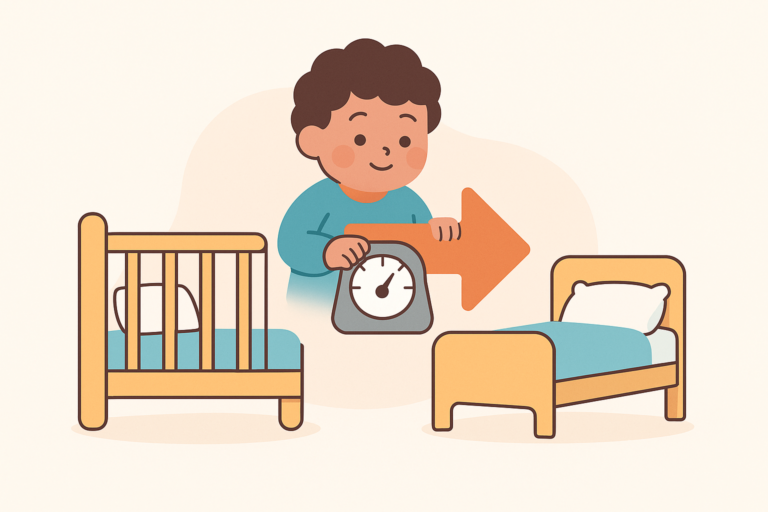
You’re staring at the crib and wondering if tonight’s the night. Your kid is suddenly taller, braver, and maybe attempting a jailbreak. You Google “crib weight limit” and fall into a rabbit hole of conflicting advice.
We’ve been there. This guide walks you through when and how to move from crib to toddler bed in a way that’s safe, calm, and not a huge project. We’ll keep the focus on two things: preventing falls and giving your child a secure sleep space that doesn’t add toxins to their world.
Who this is for: parents with climbers, late-night worriers, families making room for a new baby, or anyone who wants a non-toxic setup without replacing everything. We’ll give you the real ranges, the signs your child is ready, and a simple plan that actually works in a normal house.
Success looks like this: your child sleeps in a bed they can’t easily fall out of, the room is proofed for curiosity, and you have a bedtime routine that still ends with lights out and a quiet hallway. You’ll know your crib’s actual limits, and you’ll feel solid about the mattress and materials they’re breathing on for 10 to 12 hours.
Do this first: find your crib manual or the sticker under the mattress support. Write down the crib’s weight limit and any height guidance. That number frames every other choice.
Why weight limits matter and why this feels confusing
Where to find your crib’s real number
- Check three places: the crib manual, the label on the crib frame or mattress support, and the manufacturer’s website under your exact model name.
- Most cribs list a maximum child weight for the toddler bed or daybed conversion and a separate limit for the mattress support. The limits vary by brand.
- If you can’t find it, email customer support with a photo of the model tag. Keep the reply for your records.
What those numbers mean in plain English: the mattress platform is engineered to hold a certain load, and the side rails are designed to contain a baby or toddler of a certain size. They are not a green light to keep a tall climber in a crib forever.
Weight limit vs. readiness
Weight is only part of the story. Readiness is about behavior and safety.
- If a child can swing a leg over the rail or is hitting about 35 inches tall, the American Academy of Pediatrics says it’s time to switch to a bed to prevent falls.
- A child under the weight limit who is actively climbing is still unsafe in a crib.
- A child at or above the weight limit who is not climbing may be safe for another week or two while you prepare the room, but plan the switch soon.
Concrete checks you can do today:
- Slat spacing under 2 3/8 inches so heads and limbs can’t slip through.
- Mattress fits with no more than two finger-width gaps on any side.
- Rail height high enough that your child’s armpit is below the top of the rail when standing in the crib. If not, lower the mattress or plan the move.
Quick benchmarks from pediatric guidance
These are ranges, not rules.
- Many kids move between 18 and 36 months. The tipping point is often climbing attempts or poor sleep from frustration.
- The AAP advises moving to a bed when a child shows signs of climbing or reaches about 35 inches in height to reduce fall risk.
- No bunk beds for kids under 6. Floor beds or low toddler beds are safer for early movers.
Edge cases: if your child has motor delays, sleep-related medical needs, or uses medical equipment, check in with your pediatrician or an occupational therapist for a personalized plan. Twins or siblings who share a room may need a staggered transition.
Step by step: make the switch smoother
Prep the room like a safe sleep zone
- Anchor dressers and bookcases to the wall. Toddlers climb furniture when they can suddenly roam.
- Move cords out of reach. That includes window blind cords and baby monitor wires.
- Cover outlets and remove tippy lamps. Keep small toys and chargers off the floor.
- Put a soft rug next to the bed to cushion short rolls. Avoid thick pillows or stuffed animals near the head during sleep.
- Add a walk-through gate at the doorway if you want the room to be the boundary instead of the bed rail.
Evaluation criteria to guide your setup:
- Bed height low enough that a seated child’s feet touch the floor or they can slide off without jumping.
- Guardrail that reaches at least mid-chest when your child sits up.
- Mattress that fits the bed frame with no gapping and feels firm and supportive.
Your first week game plan
- Start with naps in the new bed for 2 to 3 days. Then switch nights.
- Keep the same bedtime routine. Change one thing at a time. The bed is the only new variable.
- Use a simple phrase at tuck-in. Example: “Bedtime means cozy body, quiet voice, staying in bed.”
- Expect a few callbacks. Walk them back calmly. Same line every time. Very boring is very effective.
- Celebrate the morning. Stickers, high-fives, or a toddler-level “You did it” builds buy-in.
If your child is already climbing
- Lower the crib mattress to the lowest setting tonight as a short-term safety step.
- Remove climb-assist items like bumpers, pillows, and big stuffed animals.
- If climbing continues, move to a floor bed or a toddler bed with rails within a day or two. Safety beats perfect timing.
Quick Comparison
Supplies that make this easier
You can do the crib-to-bed switch with what you already own. The ideas in this guide work without buying a thing. The picks below are optional helpers that can make cleanup easier, lower fall risk, and keep VOCs in check.
Firm two-stage mattress

Cleaner air and cooler sleep—GREENGUARD Gold, breathable washable cover, waterproof layer. Firm infant side + comfy toddler side. Made from recycled bottles. Learn more?
$79.99 on Amazon
Price and availability are accurate as of 04/24/2026 09:29 pm GMT and are subject to change.
If your old crib mattress is saggy or you want an easier-to-clean option for potty-training nights, Serta Perfect Start Breathable Limited Two-Stage Crib & Toddler Mattress with Washable, Waterproof Cover gives you a firm infant side, a toddler side, and a washable, waterproof cover. It fits right into the plan here: snug fit for safety, easy laundry for accidents, and a familiar surface that helps some kids settle faster during the switch.
Low-to-floor toddler frame

Low-to-floor toddler bed that boosts independence—JPMA & GREENGUARD Gold certified, solid NZ pine, non-toxic, 7 colors. Fits a standard crib mattress.
$74.97 on Amazon
Price and availability are accurate as of 04/25/2026 06:30 am GMT and are subject to change.
Ready for a small bed that still feels secure? Dream On Me Finn Toddler Bed (Vintage White Oak) – low-to-floor with guard rails, Greenguard Gold & JPMA certified sits close to the floor and has guard rails, which can reduce falls while giving your child clear edges and “my bed” pride. The Greenguard Gold and JPMA certifications line up with the low-VOC and safety-first approach we recommend.
Compact bed with rails

Make the crib-to-bed switch easy: this low-to-floor toddler bed adds side rails, JPMA-certified safety, and cute, non-toxic finishes. Check colors and size to fit.
$52.61 on Amazon
Price and availability are accurate as of 04/25/2026 06:31 am GMT and are subject to change.
If you want a simple, small-footprint option, this low-to-floor frame with safety rails supports the “safe room” plan in this guide and gives your toddler a defined sleep spot without a tall climb. It’s a straightforward bridge from crib to big-kid bed.
Breathable dual-stage mattress

Breathable core helps prevent overheating; OEKO-TEX & GREENGUARD Gold certified. Easy-clean cover, gentle on skin, fits standard cribs. Want the details?
$85.99 on Amazon
Price and availability are accurate as of 04/25/2026 03:31 pm GMT and are subject to change.
Prefer a breathable-focused mattress you can wash clean after 2 a.m. surprises? MAMAZING Aerobase 2-Stage Breathable Crib & Toddler Mattress with Washable, Waterproof Cover combines a two-stage core with a washable, waterproof cover, so you can support the transition now and keep it through the toddler years on a frame or as a floor bed.
FAQ
Safety basics
Q: Are bed rails safe for toddlers, or should I skip them?
A: Use rails that come with the toddler bed or are made for that exact model so there are no gaps. Avoid portable rails on adult beds for kids under 2. Make sure the mattress fits snugly (no more than two fingers between mattress and rail/bed frame). Keep the bed away from windows and cords, and leave a soft landing zone next to the bed. Skip pillow “barriers” — they’re a suffocation and entrapment risk.
Pacing the switch
Q: My child is 2.5 and sleeping fine in the crib. Do I have to switch now?
A: Not if they’re under the crib’s weight/height limit and not climbing. Many kids stay in the crib until 3. The best reasons to switch sooner are repeated climbing attempts, an outgrown weight limit, or potty training at night. If none of those apply, you can wait.
Troubleshooting
Q: What if my toddler keeps getting out of the new bed at bedtime?
A: Keep it boring and consistent. Calmly walk them back with a short phrase (“Bedtime now”), no extras. Use a gate at the door if needed. Try moving bedtime 15 minutes earlier to reduce overtired antics. A simple reward chart for staying in bed can help, and a visual timer or “okay to wake” light gives a clear cue.
Q: Sleep got worse after we moved to a toddler bed. Did we mess up?
A: Probably not. Expect a 1–2 week wobble. Stick to the same routine, keep the room fully childproofed, and respond the same way each wake-up. If sleep is unraveling or your child seems anxious, try a floor bed to reduce falls, or sit near the door and fade your presence over a few nights. Call your pediatrician if you see snoring, gasping, or ongoing sleep disruption beyond two weeks.
You’ve got this. The crib-to-toddler-bed switch is part safety, part timing, and part staying calm when your kid turns into a tiny escape artist. Weight limits matter, but readiness and room setup matter more.
The basic path is simple. Check your crib’s manual for limits. Scan your child’s behavior. Childproof like your toddler’s nightly mission is “floor is lava.” Then pick a next step that fits your home: convert the crib, use a small toddler bed with rails, or go floor bed for the lowest fall risk.
Good news: there isn’t one right answer. If your child is sleeping well and isn’t climbing, you can wait. If they’re scaling the rails, you can switch sooner and still protect sleep with a steady routine, a gate, and clear rules. Non-toxic options are out there without redoing the nursery.
Bottom line: choose the safest setup you can maintain at 8 p.m. and 3 a.m. The rest is practice.
Troubleshooting the tricky parts
My toddler keeps climbing out
- Drop the crib mattress to the lowest setting if it is not already there.
- Use a sleep sack that allows standing and walking but makes high-knee climbing harder.
- If escapes continue, treat it as your cue to switch to a toddler bed or floor bed.
- Install a door gate and do silent returns to bed. Keep it boring and brief.
- Move anything climbable at least 3 feet from the bed and window area.
Night waking after the switch
- Keep the same bedtime, routine order, and room environment.
- Add a quick, predictable check-in script. Example: “It’s night-night. I’ll check in 2 minutes.”
- Shorten any middle-of-the-night chats. Walk back, tuck, leave. Repeat as needed.
- Hold naps steady for a week before adjusting. Overtired toddlers wake more.
- Use a dim red night light if darkness is scary, not a bright lamp.
Refusing the new bed
- Do a daytime tour and practice. Sit, lie down, read a quick book, then end on a win.
- Keep favorite crib sheets or lovey to transfer familiar smells.
- Let your child place one small stuffed friend in the bed to build buy-in.
- Try a simple bedtime chart with 1 or 2 steps and tiny rewards in the morning.
- Consider a few nights of “camping” on the floor next to them, then fade away.
Rolling or falling out
- Use guardrails that fit the bed and leave no gaps that could trap a child.
- Push the bed against a wall on one side and place a thin landing pad on the floor.
- If falls continue, place the mattress on the floor for a few weeks.
Potty training overlap
- Do not stack two big changes in one week if you can help it.
- If both are underway, prep for fast bathroom trips. Light the path. Keep pajamas simple.
- Night training often lags. Protect the mattress with a waterproof pad and move on.
Your next steps and where to go next
Quick decision recap
- Stay in the crib if your child is under the crib’s height and weight limits, is not climbing, and sleeps well.
- Convert the crib if you already own a convertible model and want a familiar feel with rails.
- Choose a toddler bed if you want a smaller footprint and guardrails.
- Go floor bed if climbing is constant or you want the lowest fall risk. Only if the room is fully childproofed.
Edge cases to note:
- If your child has developmental delays, sleepwalking, seizures, or frequent head-banging, talk with your pediatrician before switching.
- Skip bunk and loft beds until your child is at least school age. The top bunk is not for toddlers.
One-week action plan
- Today: Read your crib manual and note the stated limits. Walk the room and remove hazards.
- Day 1: Lower the crib mattress or set up the toddler or floor bed. Install a gate and check window cords.
- Day 2: Do a daytime practice session with the new bed. Keep it upbeat and short.
- Night 1: Run your normal bedtime routine. Use guardrails if needed and a safe landing zone.
- Nights 2 to 4: Stick to silent, consistent returns. Track wake-ups to spot patterns.
- Day 5: Adjust nap timing if bedtime battles are extreme. Aim for 4 to 5 hours awake before bed.
- End of week: Tweak what is not working. Keep what is.
When to get extra help
- Your child falls repeatedly from a bed with proper rails and a safe setup.
- Night waking or bedtime battles last more than two weeks with no gradual progress.
- Loud snoring, gasping, or breathing pauses appear. Call your pediatrician.
- You feel stuck or overwhelmed. A pediatric sleep consultant can help you create a step-by-step plan.
Helpful next steps on our site
- Head to our Sleep hub for room setup tips, blackout curtain guides, and nap schedules by age.
- Check our Guides section for a deeper dive on childproofing, window safety, and furniture anchoring.
- Want the low-tox route? Read our mattress and bedding guides for material explainers and certification checklists.
You do not need a perfect nursery to make a safe switch. You need a plan you can actually do every night. Start small. Keep it consistent. Sleep follows.


Leave a Comment