
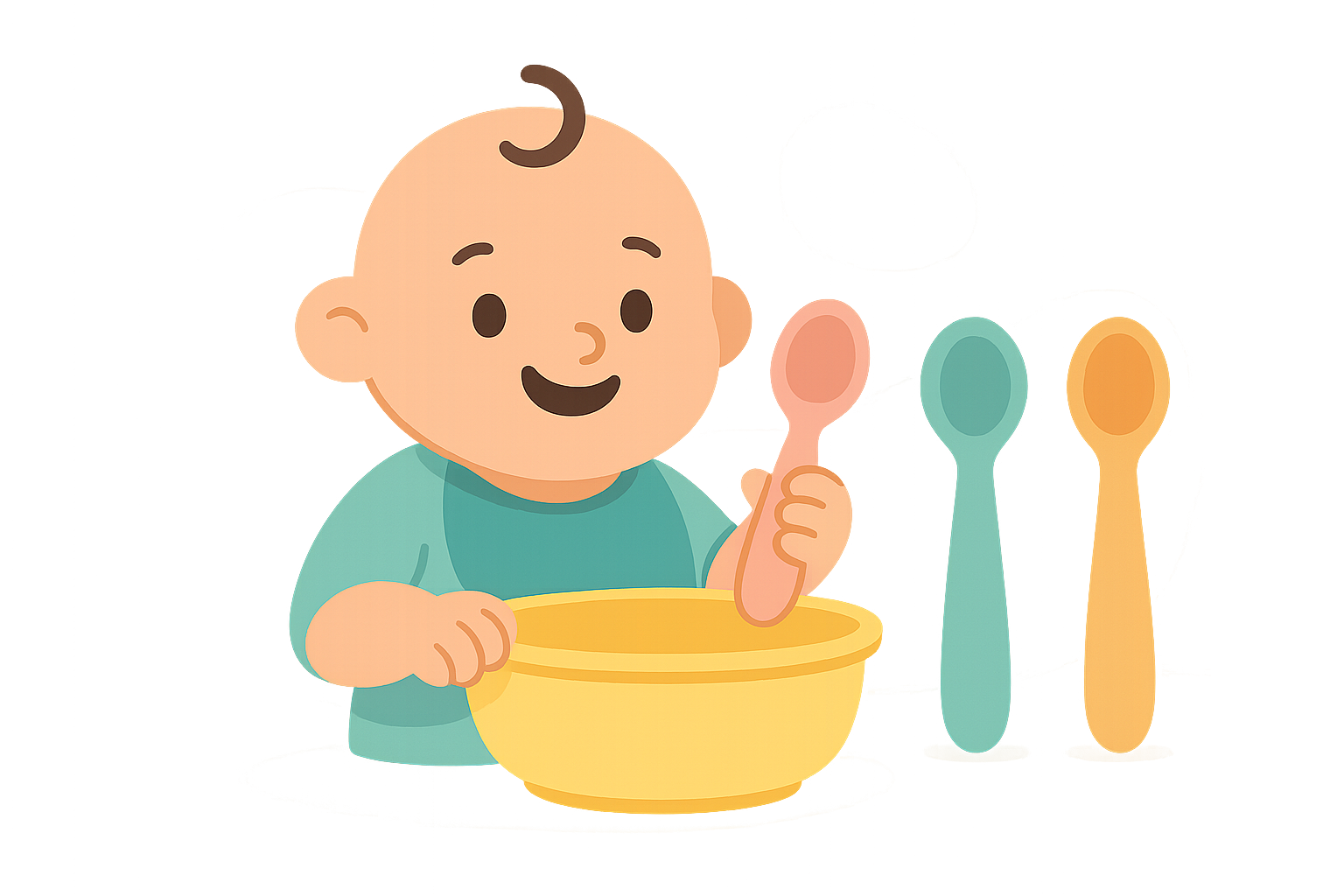

Picture this: you finally sit down with a tiny bowl of sweet potato. Your baby grabs the spoon, gums it, and flings it across the room. Normal. Also, a good time to think about what that spoon is made of and how it feels in a tiny mouth.
This guide is for the early months of solids through the toddler years. Think first tastes around 4 to 6 months, baby-led weaning, and the glorious self-feeding stage where more yogurt lands on cheeks than in bellies.
Quick Comparison


We care about two things most: safe materials and stress-free design. Safe means food-grade materials that don’t shed chemicals or tiny parts. Stress-free means easy to grip, gentle on gums, and quick to clean at the end of a long day.
The good news is you don’t need a drawer full of options. A couple of well-made spoons can cover parent-led feeding and self-feeding.
We’ll help you narrow it down with clear criteria. Materials that pass reliable safety standards. A spoon bowl that actually fits a baby mouth. Handles that work for you and your child. Real-world durability, heat resistance, and cleaning that doesn’t make you curse at the sink.
Who this guide is for and why materials matter
Ages and stages we cover
- First tastes: 4 to 6 months. You’ll want a small, shallow spoon with a soft edge for sensitive gums and tiny bites.
- Practice phase: 6 to 12 months. Look for chubby, short handles that a baby can fist-grip. Some “pre-spoons” with textured heads help catch puree without scooping.
- Confident toddler: 12 months and up. Slightly deeper bowls and sturdier tips help them graduate to bigger bites without frustration.
If your baby has oral sensitivity or is teething hard, prioritize softer silicone at first. If they love biting, a firmer tip or stainless can be helpful later. There isn’t one right path.
What “non toxic” means for spoons
In plain language, non toxic means the spoon is made from materials that are stable in food contact, don’t leach harmful chemicals, and won’t break into small parts.
- Food-grade silicone: Look for LFGB or platinum-cured silicone. It is heat stable, flexible, and gentle on gums.
- Stainless steel: 18/8 or 304 stainless is a safe, durable metal for older babies and toddlers.
- BPA-free plastics: Better than older plastics, but we still prefer silicone or stainless for heat stability and long-term durability.
What to avoid when you can:
- Melamine and bamboo-melamine composites, especially with hot foods, since melamine can migrate at high heat.
- PVC and anything with phthalates.
- Coated or painted decals that can chip.
- Multi-piece tips that detach easily.
A quick safety check you can do right now
- Tug test: If the tip is separate from the handle, give it a firm pull. If it budges, retire it.
- Flex test: Bend the spoon head. If it flops like a noodle, it may be too soft for scooping.
- Smell test: After a wash with hot water, the spoon should not smell like plastic or fragrance.
- Scan for wear: Toss anything with cracks, sticky surfaces, or peeling edges.
How to choose a safe, parent-proof baby spoon
Materials that earn trust
- Silicone for first bites and teething. Look for clear labeling like LFGB or platinum-cured. Bonus if it lists a heat rating of around 428 F or 220 C.
- Stainless steel for durability once chewing is stronger. Choose smooth edges and a small bowl. You can start stainless earlier if your baby tolerates a firmer feel.
Edge case to know: silicone can stain from tomato or curry. It is cosmetic. Stainless can feel cold, which some babies dislike at first.
Spoon bowl: size and shape that help, not hinder
- Early months: shallow bowl, narrow width, soft edges for gentle scraping.
- Self-feeding: slightly wider bowl with a bit more depth to hold thicker foods.
- Helpful detail: a rounded lip that wipes food off the top gum without poking.
A bowl that is too deep leads to overfilled bites. A bowl that is too wide makes it hard to close little lips around it.
Handles and grip that match the job
- Parent-led feeding: a longer, slim handle helps you angle small bites without blocking your view.
- Baby-led practice: short, chunky, non-slip handles are easier for tiny hands. A subtle choke guard can prevent over-insertion when they get enthusiastic.
Check the balance. If the handle is heavy and the head is light, it will tip out of bowls and make a mess.
Softness vs durability
- Softer silicone protects sensitive gums but can collapse under thick foods if it is too floppy.
- Firmer silicone or stainless holds shape for oatmeal, yogurt, and pasta.
- Tip: start soft, then add a firmer option as skills grow. You can rotate both based on the meal.
Heat resistance and safety cues
- Look for spoons rated for high heat. They should not warp in a hot dishwasher or soften in warm soup.
- Color-change heat tips can be a nice reminder, but still stir and test temperature on your wrist. Do not rely only on a color cue.
- Skip microwaving spoons in bowls of food. Heat unevenly builds and can scald.
Cleaning and care that fits real life
- One-piece designs are ideal. No seams to trap food.
- Dishwasher safe on the top rack keeps your routine simple. Hand wash wood if you use it.
- Replace at the first sign of cracks, sticky surfaces, or peeling. For daily use, many families refresh silicone every 6 to 12 months.
Do this first: pick one parent-feeding spoon and one short-handled baby spoon. Keep them in a small cup on the counter so you can grab the right tool when the hunger cry hits.
Tools that make spoon feeding easier
Best Overall
Soft, bendable silicone spoons for first bites—gentle on gums, long handle, pastel colors. BPA-free and dishwasher/boil safe. 6-pack that eases self-feeding. See more.
$9.99 on Amazon
Price and availability are accurate as of 04/25/2026 10:15 am GMT and are subject to change.
A silicone suction bowl with low sides makes it easier for little hands to scoop without chasing food around. It also cuts down on the inevitable plate frisbee phase. Look for a sturdy suction base, an easy-release tab, and dishwasher-safe materials. If you want fewer bowl flips during self-feeding, this simple option Soft Silicone Baby Spoons (6-Pack), Gentle on Gums, Dishwasher & Boil Safe is a good fit.
Best First Spoon
Make self-feeding easier: easy-grip baby spoons with sensory bumps and a built-in choke guard. Safe silicone, dishwasher safe. Cute colors – pick your set.
$9.99 on Amazon
Price and availability are accurate as of 04/25/2026 07:16 pm GMT and are subject to change.
A wipeable bib with a soft catch pocket saves outfits and your sanity when spoons boomerang puree back at you. It’s great for daycare and travel because it cleans fast and dries quickly. Prioritize a wide pocket that actually stays open and a comfortable neck closure. If you prefer a foldable pocket style, take a look at SAMiGO Silicone Baby Spoons for Self-Feeding, 6+ Months (3-Pack).
Best Self-Feeding
Soft, grippy silicone spoons that boost self-feeding, soothe teething gums, with a choke barrier for safer bites + cute Gray/Blue/Mint. See if they fit your kit.
$9.99 on Amazon
Price and availability are accurate as of 04/25/2026 10:15 pm GMT and are subject to change.
A slim travel utensil case keeps clean spoons clean and dirty spoons contained in your bag. It’s handy for restaurants, grandma’s house, and park snacks. Aim for a case that fits two spoons, snaps securely, and rinses out easily. This compact option UpwardBaby Self-Feeding Silicone Spoons with Anti-Choke Barrier for Baby-Led Weaning (Blue/Gray/Mint) pairs well with any baby spoon set.
FAQ
Buying decisions
- How do I choose a first spoon for my baby?
Look for a soft, flexible tip, a shallow bowl, and a narrow width. That combo is gentle on gums and makes it easier to get food off the spoon. A longer handle helps you feed in the early months. For materials, food‑grade silicone or stainless steel are reliable. If you buy plastic, choose BPA‑free and stick to simple, uncoated designs. Start with 2 to 4 spoons so you’re not washing after every meal.
- Do I need silicone or stainless steel?
For 6 to 12 months, silicone is forgiving on sore gums and new teeth. Once your toddler is scooping on their own, stainless steel is tougher and helps with cleaner bites. Many families use both: silicone for early bites and practice, stainless for bigger appetites and durability.
Use and safety
- When can my baby start self‑feeding with a spoon?
Around 6 months, if they can sit with minimal support, show interest in food, and bring hands to mouth. Start with pre‑loaded spoons they can grab. Choose short, easy‑grip handles, consider a choke guard, and always supervise. Skip deep or oversized bowls that encourage overstuffing.
Cleaning and care
- How do I clean baby spoons, and when should I replace them?
Wash with warm soapy water or top‑rack dishwasher. For silicone, you can boil for a quick first‑use sanitize. Avoid abrasive scrubbers and harsh bleach. Check regularly for tears, loose tips, peeling coatings, warping, or sticky residue that won’t wash off. Replace at the first sign of damage. Store travel spoons in a case so the mouth end stays clean.
If you remember one thing from this guide, make it this. The right baby spoon is soft where it matters, sized for tiny mouths, and easy to clean when life gets messy. Materials matter, but you do not need the fanciest set to feed your baby well.
Start simple. One gentle first spoon for you to guide. One shallow, grippy spoon for your baby to try. Add stainless steel later when chewing gets stronger and you want durability.
Good news. Most solid, non-toxic options are affordable. Pick what fits your baby’s stage and your sink routine, then buy two or three so you are not washing between every meal.
Your next steps: a simple plan to choose and use
- Pick a safe material first. Food-grade silicone or stainless steel are easy wins.
- Match the bowl to the job. Shallow for self-feeding, slightly deeper for soups and purees you are serving.
- Check the handle. Slim and easy for you early on, chunky and short for baby-led weaning.
- Confirm care. Dishwasher safe if that is your routine, and no hidden crevices that trap food.
- Buy backups. Keep a set in the diaper bag and a set at home.
- Inspect often. Replace if silicone tears or a coating peels.
For first tastes 4 to 6 months
- Use a soft, small, flexible tip that will not scrape tender gums.
- You hold the spoon. Let baby mouth it between bites to build interest.
- Look for slim handles and a shallow bowl so you are not overloading each bite.
For self-feeding 6 to 12 months
- Choose a short, chunky handle that is easy to grip.
- Go shallow and wide with a rim that helps food cling to the spoon.
- Consider a choke guard if your baby pushes everything too far back while teething.
For toddlers 12 months and up
- Move toward firmer silicone or stainless steel for durability and cleaner scoops.
- Try a slightly deeper bowl for yogurt, rice, and soups.
- If daycare has rules about metal, keep a silicone set for school and steel at home.
Edge cases and caveats
- Strong biters or oral sensory seekers may shred very soft silicone. Switch to firmer silicone or stainless steel with rounded edges.
- If your dishwasher runs cool or you skip heated dry, sanitize occasionally in boiling water per the manufacturer, and dry fully to avoid trapped moisture.
- For preemies or babies in feeding therapy, ask your provider about spoon depth and firmness. A flat pre-spoon or extra shallow bowl can help reduce gagging.
How we test, how we earn, and what that means
Our testing and safety lens
We focus on materials first. Food-grade silicone with clear labeling and stainless steel without coatings. We handle each spoon with wet, slippery hands, and we watch for real-world snags like food stuck in seams or bowls that are too deep. If a product is hard to clean, flakes, or feels sharp, it does not make our list.
Affiliate disclosure and our promise
Some links on this page are affiliate links. If you buy through them, we may earn a small commission at no cost to you. We only recommend items we would use with our own kids. Safety, materials, and ease of use always come before commissions. If something better comes along, we will update our picks.
Notes for editors: SEO and UX details
- Use descriptive alt text on all spoon images that notes material and age fit.
- Include clear H2s with key terms like best baby spoons and non-toxic baby spoons for scan-ability.
- Add product schema for picks that have reviews to help search clarity.
- Link internally to related guides on baby bowls, cups, and weaning tips with natural anchor text.
- Keep calls to action simple. One primary link per pick reduces choice overload.
You have this. Pick one safe starter spoon, add a self-feeding option, and keep a backup in the bag. Done is better than perfect, and your baby will learn just fine with a simple, well-made spoon.



Leave a Comment